
If you’re thinking about buying a home in Indiana—or refinancing one you already own—mortgage rates are probably top of mind. And for good reason. Even a small difference in interest rates can mean thousands of dollars saved (or lost) over the life of a loan.
But here’s the thing: mortgage rates aren’t just numbers you glance at and move on from. They’re influenced by a web of economic factors, personal financial details, and timing decisions that can either work in your favor—or against it.
So let’s slow things down and really unpack what’s happening with Indiana mortgages today, what influences them, and how you can make smarter decisions in this market.
A Quick Snapshot of Mortgage Rates in Indiana
Mortgage in Indiana generally track national trends, but they can vary slightly based on local lenders, competition, and borrower profiles.
As of today (early 2026 context), typical ranges look something like:
- 30-year fixed mortgage: ~6.2% – 7.1%
- 15-year fixed mortgage: ~5.4% – 6.3%
- Adjustable-rate mortgages (ARMs): often start lower (around 5.5% – 6.5%) but can change over time
Now, these are just ballpark ranges. Your actual rate could be higher or lower depending on your credit score, down payment, income stability, and even the specific lender you choose.
Why Mortgage Rates Matter More Than You Think
It’s easy to focus on the monthly payment and forget the bigger picture. But interest price directly impact:
- Total cost of your home
- Monthly affordability
- Loan approval odds
- Refinancing opportunities later on
Let’s say you’re buying a $300,000 home. A difference of just 0.5% in interest rate could mean paying tens of thousands more over 30 years.
That’s why timing and preparation matter.
What’s Driving Mortgage Rates Right Now?
Mortgage rates don’t just move randomly. They respond to a mix of economic signals, and understanding these helps you predict where things might be heading.
1. Inflation
Inflation is one of the biggest drivers.
- When inflation is high, mortgage rates tend to rise
- When inflation cools, rates often stabilize or drop
Why? Because lenders want to protect their returns. If money loses value faster (inflation), they charge more interest.
2. Federal Reserve Policy
The Federal Reserve doesn’t set mortgage rates directly—but it heavily influences them.
When the Fed:
- Raises interest rates → mortgage rates usually increase
- Lowers rates → mortgage rates may fall
In recent years, aggressive rate hikes to combat inflation pushed mortgage rates higher than many buyers were used to.
3. Bond Market (Especially the 10-Year Treasury)
Mortgage tend to follow the 10-year Treasury yield.
- When Treasury yields rise → mortgage rates rise
- When yields fall → mortgage rates follow
This is one of the most reliable indicators professionals watch daily.
4. Economic Growth & Employment
A strong economy can push rates up.
- More jobs = more spending = potential inflation
- That leads to higher interest rates
Ironically, a “good economy” doesn’t always mean good mortgage price.
Indiana-Specific Factors That Affect Rates
While national trends dominate, Indiana has its own characteristics that can subtly influence rates and affordability.
1. Lower Cost of Living
Indiana is known for relatively affordable housing compared to states like California or New York. This means:
- Smaller loan amounts
- Lower monthly payments
- Potentially less financial strain even with higher price
2. Competitive Local Lenders
Indiana has a strong mix of:
- Local banks
- Credit unions
- Regional mortgage companies
This competition can sometimes lead to better price or flexible loan options compared to more saturated markets.
3. Property Taxes
Indiana property taxes are moderate compared to national averages, which can offset slightly higher mortgage rates in terms of overall monthly cost.
Types of Mortgage Rates You’ll Encounter
Not all mortgage price are created equal. Understanding the types available helps you choose wisely.
Fixed-Rate Mortgages
The most common option.
- Same interest rate for the life of the loan
- Predictable monthly payments
- Ideal for long-term homeowners
Best for: Stability and long-term planning
Adjustable-Rate Mortgages (ARMs)
These start with a lower rate but can change after a set period.
- Example: 5/1 ARM → fixed for 5 years, then adjusts annually
- Risk of higher payments later
Best for: Short-term homeowners or those expecting price to drop
FHA, VA, and USDA Loans
Government-backed loans can offer lower price or easier qualification.
- FHA: Lower credit score requirements
- VA: For veterans, often no down payment
- USDA: For rural areas (many parts of Indiana qualify)
What Determines Your Mortgage Rate?

Here’s where things get personal. Even if the “average” rate is 6.5%, you might get 5.9%… or 7.3%.
Why?
1. Credit Score
This is huge.
- 760+ → best rates
- 700–759 → good rates
- 620–699 → higher rates
- Below 620 → limited options
A small improvement in your score can save thousands.
2. Down Payment
The more you put down, the less risk for the lender.
- 20%+ → best rates + no PMI
- 10–19% → decent rates
- <10% → higher rates
3. Loan Type & Term
- 15-year loans → lower price, higher payments
- 30-year loans → higher price, lower payments
4. Debt-to-Income Ratio (DTI)
Lenders want to see that you’re not stretched too thin.
- Lower DTI = better price
- Higher DTI = more risk = higher price
5. Employment & Income Stability
Consistent income makes lenders more comfortable offering better terms.
Should You Buy Now or Wait?
This is the million-dollar question.
And honestly, there’s no one-size-fits-all answer.
Buying Now Makes Sense If:
- You’ve found a home you love
- You can comfortably afford payments
- You plan to stay long-term
- You can refinance later if rates drop
Waiting Might Make Sense If:
- Your credit score needs improvement
- You need to save for a larger down payment
- You expect rates to drop significantly
But here’s the reality: timing the market perfectly is almost impossible.
A better strategy is to focus on what you can control.
Strategies to Get the Best Mortgage Rate

If you want to win in today’s market, don’t just watch rates—optimize your position.
1. Improve Your Credit Score
Even a 20–40 point increase can lower your rate.
- Pay down credit cards
- Avoid new debt
- Check your credit report for errors
2. Shop Around (Seriously)
Don’t settle for the first offer.
Get quotes from:
- Banks
- Credit unions
- Online lenders
Even a 0.25% difference matters.
3. Consider Buying Points
You can “buy down” your rate by paying upfront.
- Higher upfront cost
- Lower long-term payments
This works best if you plan to stay in the home for years.
4. Lock Your Rate at the Right Time
Price can change daily.
- If rates are trending upward → lock early
- If stable → you might wait slightly
Talk to your lender about lock options.
5. Choose the Right Loan Type
Don’t just default to a 30-year fixed.
- A 15-year loan might save you more
- An ARM could work if you plan to move
Refinancing: Is It Worth It?
If you already own a home in Indiana, refinancing might be on your radar.
When It Makes Sense:
- You can lower your rate by at least 0.5%–1%
- You want to reduce monthly payments
- You want to switch loan types (ARM → fixed)
When It Doesn’t:
- Closing costs outweigh savings
- You plan to move soon
Future Outlook: Where Are Rates Headed?
No one can predict mortgage price with absolute certainty, but trends suggest:
- Rates may gradually stabilize if inflation continues to cool
- Sharp drops are unlikely in the short term
- Moderate fluctuations will continue
In other words: don’t expect a sudden return to ultra-low rates like 2020–2021 anytime soon.
The Emotional Side of Mortgage Decisions
Let’s be real for a moment.
Buying a home isn’t just financial—it’s emotional.
- You’re thinking about your future
- Your family
- Stability
- Identity
And when price are high, it can feel frustrating or even discouraging.
But here’s a grounded perspective:
- A slightly higher rate doesn’t make a home a bad decision
- Renting forever to “wait for perfection” can cost you too
- You can refinance—but you can’t go back in time and buy at yesterday’s home price
Common Mistakes to Avoid
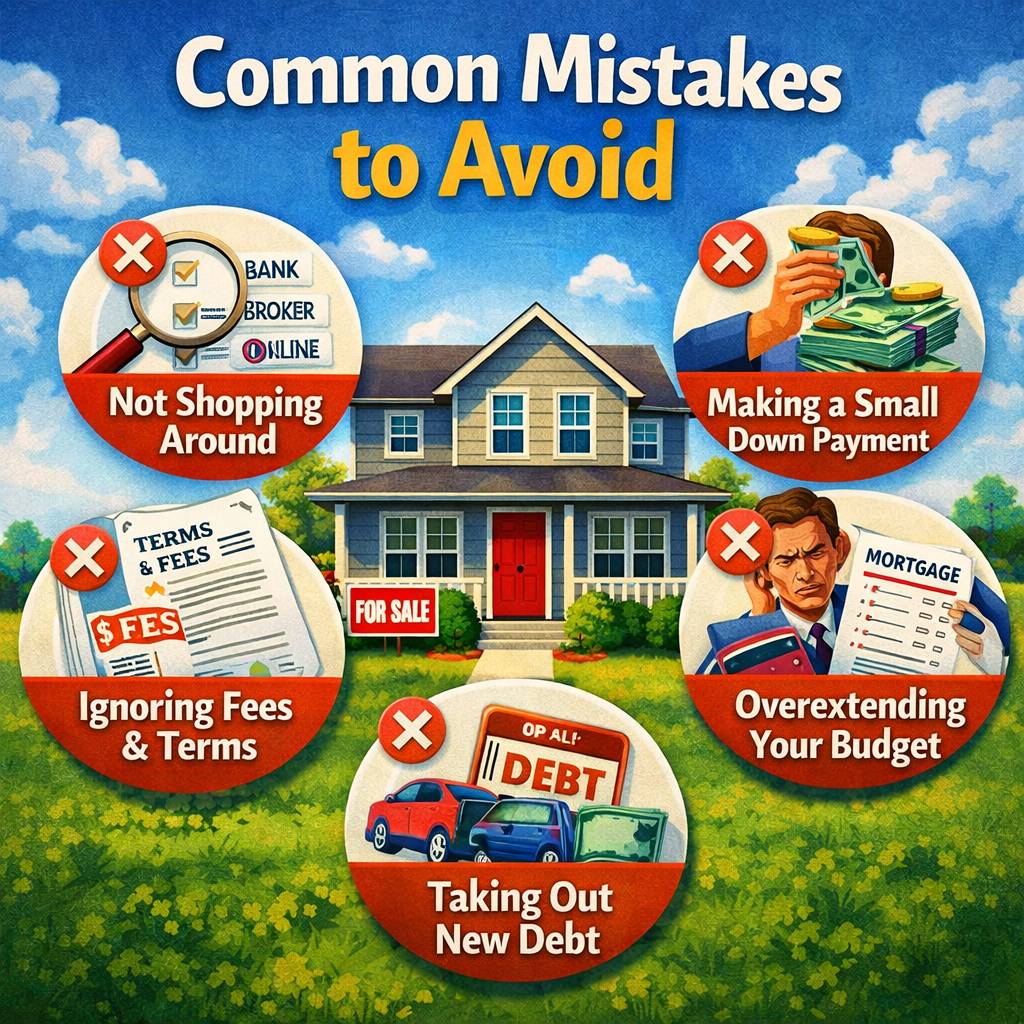
Even smart buyers slip up. Watch out for these:
1. Focusing Only on Interest Rate
Monthly payment matters more in your day-to-day life.
2. Not Getting Pre-Approved
This weakens your position in a competitive market.
3. Ignoring Closing Costs
Price aren’t everything—fees add up.
4. Overstretching Your Budget
Just because you’re approved doesn’t mean you should max it out.
5. Skipping Rate Comparisons
This is one of the most expensive mistakes.
Final Thoughts
Indiana mortgage rates today reflect a broader economic story—one shaped by inflation, policy decisions, and market forces beyond any one buyer’s control.
But here’s the empowering part: you still have a lot of control over your outcome.
- Your credit score
- Your lender choice
- Your loan structure
- Your timing
All of these can shift the numbers in your favor.
So instead of waiting for “perfect” price, focus on being a well-prepared buyer. That’s where the real advantage lies.
Because at the end of the day, the goal isn’t just to get the lowest rate—it’s to make a decision that works for your life, your finances, and your future.