

If you’re planning to buy a home in Indiana this year, one of the biggest questions on your mind is probably: Where are mortgage rates headed? After a few years of dramatic swings, many Hoosier homebuyers are feeling cautious—but also hopeful.
While no one can predict mortgage rates with perfect accuracy, we can look at current trends, economic signals, and Indiana’s housing market conditions to get a clear picture of what homebuyers should realistically expect in the months ahead.
Let’s break it down.
A Quick Look Back: Why Rates Have Been So Volatile
Over the past few years, mortgage rates have moved faster than most buyers were used to. After sitting at historic lows during the pandemic era, rates climbed sharply as inflation surged nationwide. The Federal Reserve responded by raising benchmark interest rates in an effort to cool inflation, and mortgage rates followed.
Although mortgage rates aren’t directly set by the Fed, they are heavily influenced by broader economic conditions—including inflation expectations, bond markets, and monetary policy.
Now, as inflation shows signs of easing compared to its peak, rates have stabilized somewhat. But “stabilized” doesn’t necessarily mean “low.” Buyers should be prepared for rates that are still higher than what we saw in 2020 and 2021.
Where Indiana Mortgage Rates Stand Now
Mortgage rates in Indiana generally track national averages, though they can vary slightly depending on:
- Your credit score
- Loan type (conventional, FHA, VA, USDA)
- Down payment size
- Loan term (30-year vs. 15-year)
- The lender you choose
Indiana typically remains one of the more affordable housing markets in the country. That affordability helps offset higher interest rates compared to more expensive coastal states. Even if rates are elevated compared to pandemic lows, the overall monthly payment may still be manageable thanks to lower home prices in many Indiana cities.
What Could Influence Mortgage Rates This Year?
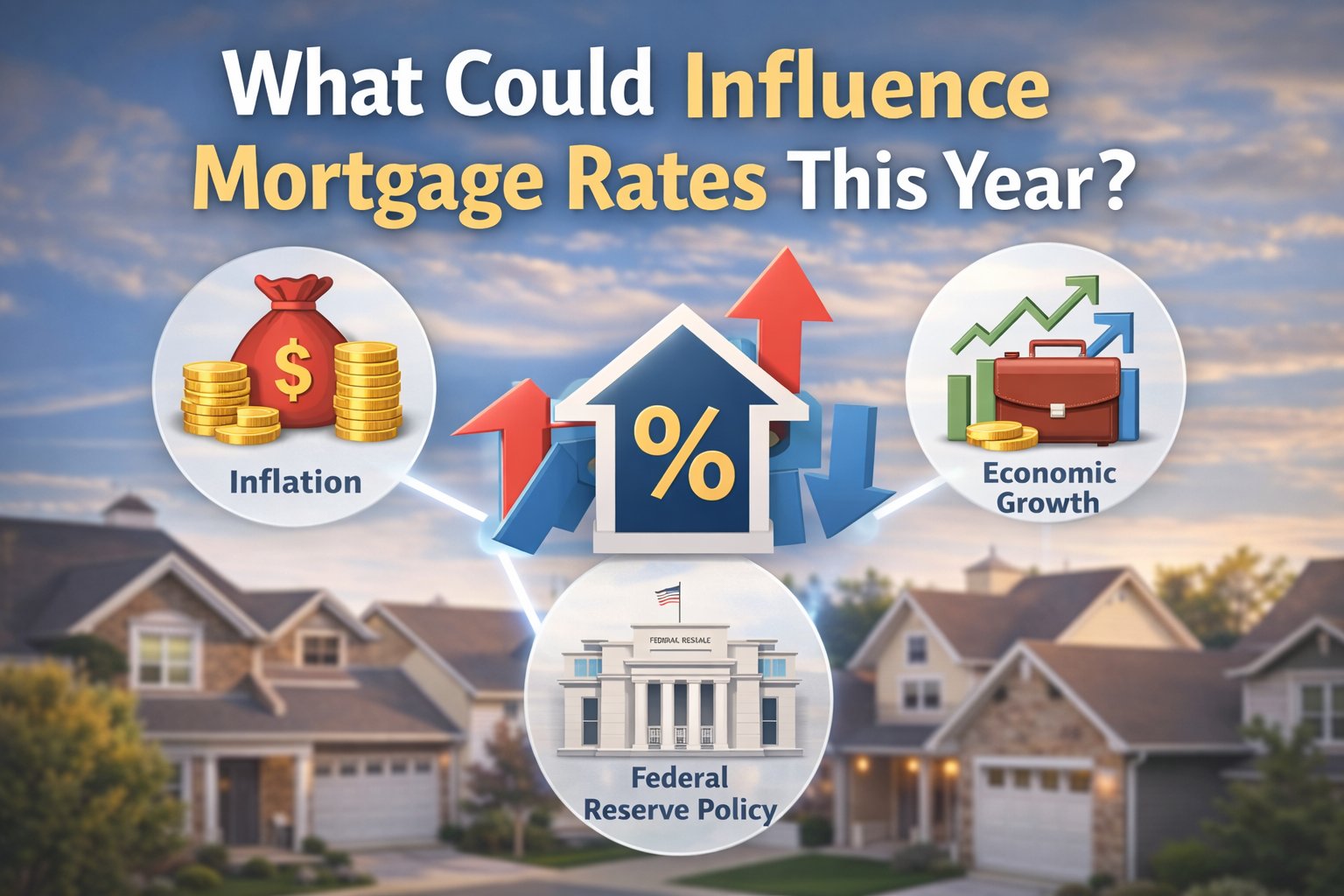
Several key factors will shape what happens with mortgage rates in Indiana this year:
1. Inflation Trends
If inflation continues to cool, mortgage rates could gradually ease. However, if inflation proves sticky or resurges, rates may stay elevated longer than homebuyers would like.
2. Federal Reserve Policy
Even though mortgage rates are not directly controlled by the Fed, its decisions strongly influence them. If the Fed signals rate cuts later in the year, mortgage rates could decline in anticipation.
That said, experts don’t expect a return to ultra-low 3% rates anytime soon. A more realistic expectation would be moderate adjustments rather than dramatic drops.
3. Economic Growth and Employment
Indiana’s economy plays a role too. Strong job growth and steady employment typically support a healthy housing market. If economic conditions weaken significantly, mortgage rates may decline—but that often comes with increased financial uncertainty.
How Higher Rates Affect Indiana Homebuyers
Higher mortgage rates impact homebuyers in one major way: affordability.
For example, even a 1% increase in mortgage rate can raise your monthly payment significantly on a 30-year loan. That means:
- You may qualify for a smaller loan amount
- You might need a larger down payment
- Your budget may need adjusting
However, Indiana’s relatively affordable home prices compared to national averages can soften that blow. Cities like Indianapolis, Fort Wayne, Evansville, and South Bend still offer more attainable price points than many metro areas across the country.
In fact, some buyers are finding that while rates are higher, competition has cooled slightly compared to the frenzied bidding wars of recent years. That can mean:
- Fewer multiple-offer situations
- More room for negotiation
- Potential seller concessions
In certain situations, buyers may even negotiate for sellers to help buy down the mortgage rate temporarily.
Will Waiting for Lower Rates Help?
This is one of the biggest questions buyers ask.
It’s tempting to wait for rates to drop. But here’s the reality: timing the market perfectly is nearly impossible. If rates decline significantly, more buyers may jump back into the market, which could push home prices higher again.
There’s a balance to consider:
- Lower rates can improve affordability
- Increased competition can drive up prices
Many financial professionals suggest focusing less on trying to predict the perfect moment and more on whether you’re personally ready to buy. If you have stable income, manageable debt, and plan to stay in the home for several years, buying at today’s rate—with the option to refinance later—can still be a smart move.
Refinancing: A Strategy to Keep in Mind

One important factor homebuyers shouldn’t overlook is refinancing potential.
If you purchase a home this year and rates fall later, refinancing could reduce your monthly payment. While refinancing does involve costs, it can make sense if rates drop enough.
This strategy allows buyers to:
- Secure a home now
- Build equity
- Improve loan terms later
Of course, refinancing isn’t guaranteed—you’ll still need to qualify, and market conditions must cooperate—but it offers flexibility that didn’t exist in past decades.
Loan Options Indiana Buyers Should Explore
In a higher-rate environment, choosing the right loan becomes even more important.
Here are a few options Indiana buyers may want to consider:
Conventional Loans
Often ideal for buyers with strong credit and stable finances.
FHA Loans
Helpful for first-time buyers or those with lower credit scores, since they require smaller down payments.
VA Loans
Available to eligible veterans and active-duty service members, often offering competitive rates and no down payment requirements.
USDA Loans
Especially relevant in rural parts of Indiana. These loans can offer zero down payment options for qualified buyers in eligible areas.
Speaking with a local mortgage professional who understands Indiana’s housing market can help you compare these options effectively.
Regional Trends Across Indiana
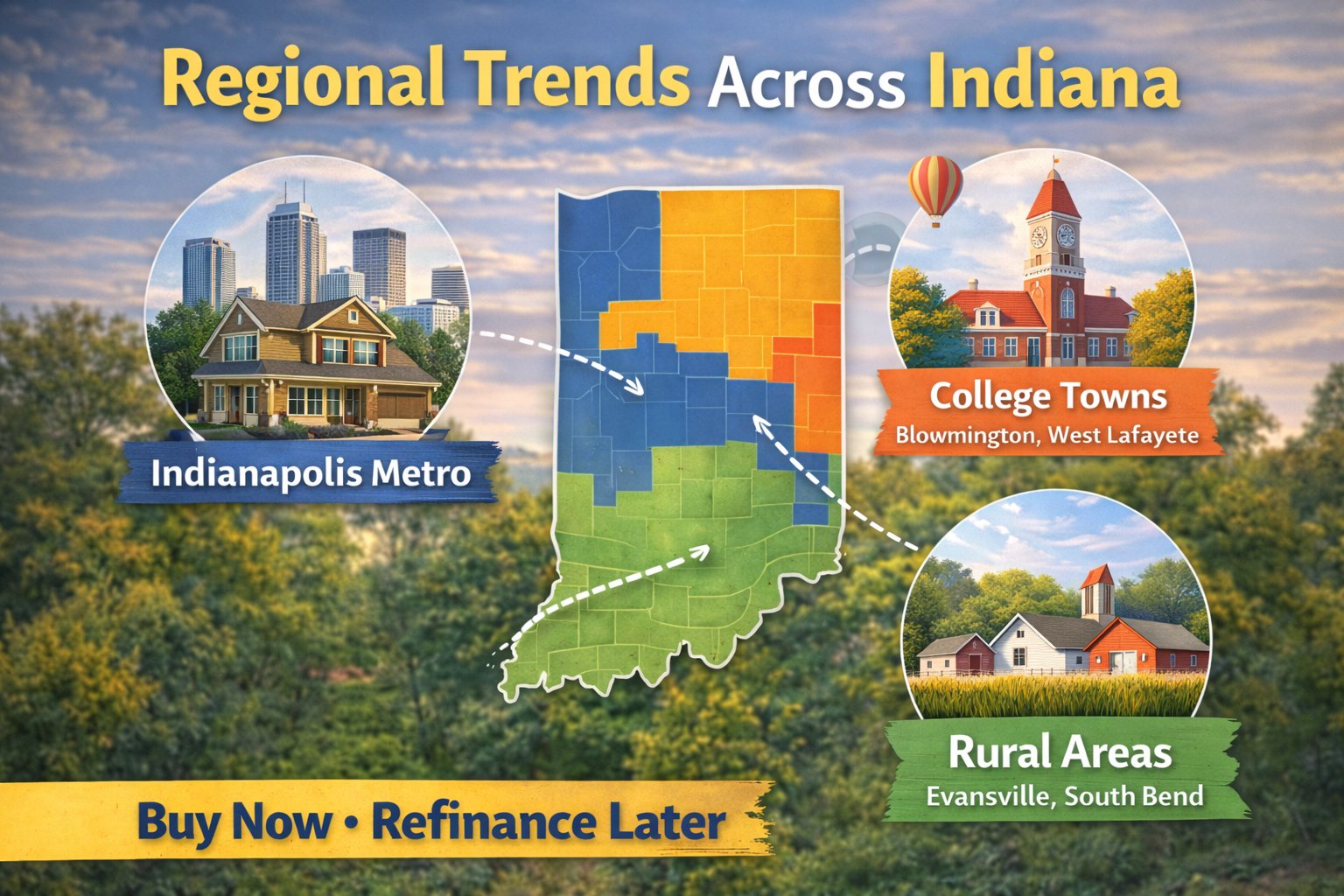
Indiana is not a one-size-fits-all housing market. Conditions vary by region:
- Indianapolis Metro: Still strong demand, especially in suburban areas.
- College Towns (Bloomington, West Lafayette): Influenced by university activity and rental demand.
- Rural Areas: Often more eligible for USDA financing and lower home prices overall.
Understanding local trends can give you an advantage when planning your purchase.
What Homebuyers Should Do Right Now
If you’re thinking about buying a home in Indiana this year, here are practical steps to take:
- Check Your Credit Score – Even small improvements can make a difference in your rate.
- Compare Multiple Lenders – Don’t settle for the first offer. Rates and fees vary.
- Get Pre-Approved – This strengthens your position when making an offer.
- Understand Your Budget – Focus on monthly affordability, not just the home price.
- Work with Local Professionals – Indiana-based agents and lenders understand regional nuances.
Preparation can often save you more money than trying to guess market movements.
The Bottom Line
Indiana mortgage rates this year are likely to remain higher than the historic lows of the early 2020s—but that doesn’t mean opportunity has disappeared.
The state’s relative affordability, diverse housing markets, and steady economic conditions continue to make it attractive for homebuyers. While rates may fluctuate throughout the year, buyers who are financially prepared and focused on long-term goals can still find smart opportunities.
Instead of asking, “Will rates drop?” a better question might be: “Am I ready to buy, and does this home fit my financial future?”
With the right planning, flexibility, and professional guidance, Indiana homebuyers can navigate this year’s mortgage landscape confidently—and potentially position themselves well for the years ahead