
When purchasing a home in Indiana, choosing the right type of mortgage is one of the most important financial decisions you’ll make. Among the many loan options available, conventional mortgages remain one of the most popular choices for Indiana homebuyers. Known for their flexibility, competitive interest rates, and broad eligibility, conventional loans can be an excellent option for first-time buyers, move-up buyers, and investors alike.

This guide will walk you through what conventional mortgages are, how they work in Indiana, their requirements, benefits, and whether this type of loan might be right for you.
What Is a Conventional Mortgage?
A conventional mortgage is a home loan that is not insured or guaranteed by a government agency such as the Federal Housing Administration (FHA), the Department of Veterans Affairs (VA), or the U.S. Department of Agriculture (USDA). Instead, these loans are backed by private lenders and often conform to guidelines set by Fannie Mae and Freddie Mac.
Because conventional loans are not government-backed, lenders rely more heavily on the borrower’s credit profile, income stability, and overall financial health when approving the loan.
Why Conventional Mortgages Are Popular in Indiana
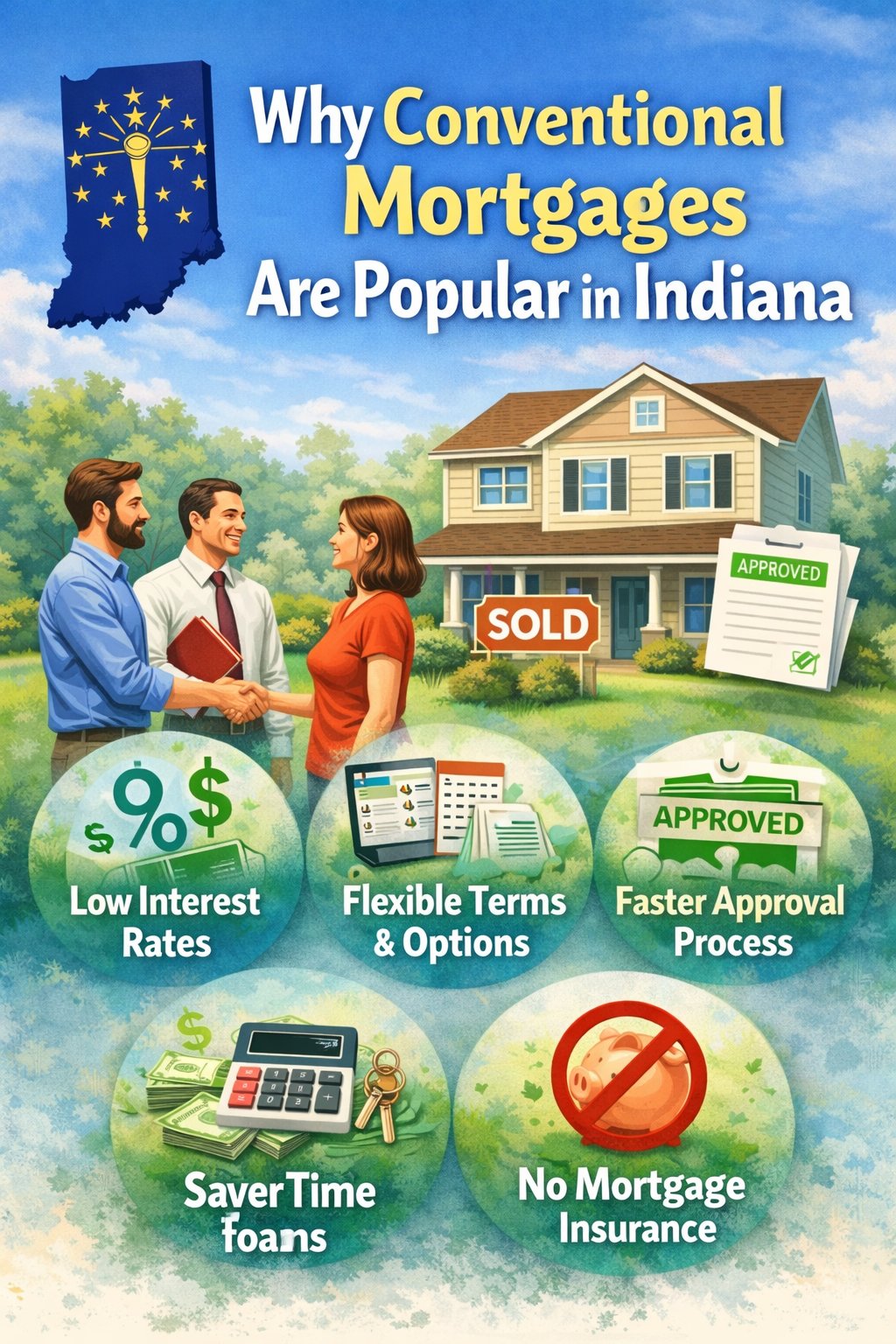
Indiana’s housing market offers a relatively affordable cost of living compared to many other states. This affordability makes conventional mortgages particularly attractive because borrowers can often qualify with moderate incomes and avoid some of the extra costs associated with government-backed loans.
Some reasons conventional loans are widely used in Indiana include:
- Competitive home prices across urban, suburban, and rural areas
- Strong availability of local and regional lenders
- Flexibility for primary residences, second homes, and investment properties
- Lower long-term costs for borrowers with strong credit
Whether you’re buying a home in Indianapolis, Fort Wayne, Evansville, South Bend, or a smaller Indiana town, conventional mortgages are widely available.
Conventional Loan Requirements in Indiana
While exact requirements vary by lender, most conventional mortgages in Indiana follow standard national guidelines.
Credit Score Requirements
Most lenders require a minimum credit score of 620 to qualify for a conventional loan. However, borrowers with higher credit scores—typically 740 or above—often receive better interest rates and lower mortgage insurance costs.
Down Payment
One of the biggest advantages of conventional mortgages is flexibility with down payments:
- As little as 3% down for qualified first-time homebuyers
- 5% to 10% down for repeat buyers
- 20% or more down allows borrowers to avoid private mortgage insurance (PMI)
Indiana buyers who have saved for a down payment may find conventional loans especially appealing.
Debt-to-Income Ratio (DTI)
Most lenders prefer a DTI ratio below 43%, though some may allow higher ratios with strong credit or financial reserves. DTI compares your monthly debt payments to your gross monthly income.
Income and Employment
Borrowers typically need to show:
- Stable employment (usually two years of work history)
- Verifiable income through pay stubs, W-2s, or tax returns
- Consistent earnings that support the mortgage payment
Types of Conventional Mortgages Available in Indiana
Conventional loans come in several forms, allowing borrowers to choose what best fits their goals.
Fixed-Rate Conventional Loans
Fixed-rate mortgages offer a stable interest rate and predictable monthly payments. Common terms include:
- 15-year fixed
- 20-year fixed
- 30-year fixed
These loans are ideal for Indiana homeowners who plan to stay in their home long-term and want payment stability.
Adjustable-Rate Mortgages (ARMs)
ARMs typically start with a lower interest rate for an initial period (such as 5 or 7 years), after which the rate adjusts periodically. These loans may benefit buyers who expect to move or refinance before the adjustment period begins.
Conforming vs. Non-Conforming Loans
- Conforming loans meet loan limits set by the Federal Housing Finance Agency (FHFA).
- Non-conforming loans, such as jumbo loans, exceed those limits and are often used for higher-priced homes.
Most homes in Indiana fall within conforming loan limits, making standard conventional financing accessible.
Private Mortgage Insurance (PMI)
If your down payment is less than 20%, lenders typically require private mortgage insurance. PMI protects the lender—not the borrower—if the loan defaults.
The good news for Indiana homeowners is that PMI on conventional loans can be removed once you reach 20% equity, either through regular payments or rising home values. This can significantly reduce your monthly payment over time.
Benefits of Conventional Mortgages in Indiana
Conventional loans offer several advantages that make them appealing across Indiana’s housing market:
- Lower total borrowing costs for borrowers with strong credit
- No upfront mortgage insurance fees (unlike FHA loans)
- Flexible property types, including condos and investment properties
- PMI can be canceled, reducing long-term expenses
- Competitive interest rates in stable markets
For many Indiana buyers, these benefits outweigh the stricter qualification standards.
Conventional vs. Government-Backed Loans
While FHA, VA, and USDA loans serve important roles, conventional mortgages often work best for borrowers who have:
- Good to excellent credit
- Stable income
- Some savings for a down payment
- Long-term homeownership plans
Government-backed loans may be better for buyers with lower credit scores or limited savings, but they often come with higher mortgage insurance costs over time.
Is a Conventional Mortgage Right for You?
A conventional mortgage may be a strong choice if you are an Indiana homebuyer who:
- Has a credit score of 620 or higher
- Can afford a down payment of at least 3%
- Wants lower long-term mortgage insurance costs
- Plans to build equity and reduce payments over time
Working with an experienced Indiana mortgage lender can help you determine whether a conventional loan fits your financial goals and homeownership plans.
Final Thoughts
Conventional mortgages remain one of the most versatile and cost-effective home financing options in Indiana. With flexible down payments, competitive interest rates, and the ability to eliminate mortgage insurance, these loans continue to be a top choice for buyers across the state.
If you’re considering buying a home in Indiana, understanding how conventional mortgages work is an important first step toward confident, informed homeownership.